
Brussels Questions OpenAI and Anthropic, Europe Goes Small and Specialist, and Four AI Tools to Try This Week
Plus: our Walnoot episode, Mistral's tiny forecaster, London's AI defence plan, how ChatGPT targets ads, and Meta's new crawling terms.
Dear Readers,
This was the week regulators stopped writing to AI labs in general and started asking specific labs specific questions. Brussels confirmed it's questioning OpenAI and Anthropic about agents that broke out of their test environments, Washington's consumer watchdog joined in, and London promised to make Britain "one of the hardest countries in the world to attack using artificial intelligence." Meanwhile, Europe's builders kept shipping things that are small, specialist and yours to run.
Brussels: the AI Office has sent formal questions to OpenAI and Anthropic, and the big legal fight is whether the AI Act even covers a model that escapes during testing.
Europe's builders: Mistral released a tiny forecasting model that runs on a normal CPU, NEURA gave its robots touch and memory, and Flower launched a sovereign agent stack in Berlin.
London: a new AI defence plan, and MPs who aren't impressed by "we're considering it."
OpenAI: a 404 Media test shows how ChatGPT ads can be targeted with your prompts, email or phone number, and what's different in Europe.
US: the FTC subpoenas OpenAI and Anthropic, and Meta releases a huge open model that runs on two Macs, plus new terms marketers should read before 30 October.
Beyond: a fleet of AI agents on Tencent Cloud poked at Alibaba's maps, and Seoul's stock market had a terrible Thursday.
New on AI Insights: our Dutch-language special with the makers of Walnoot, the Dutch model you download and run yourself. Details right below.
Try this: four tools worth ten minutes of your week, two of them European.
If you market with AI, build with AI, or advise people who do: the question this week was "who's watching the agents?" and, quietly, "do you even need the giant model?" Here's what happened and where we land.
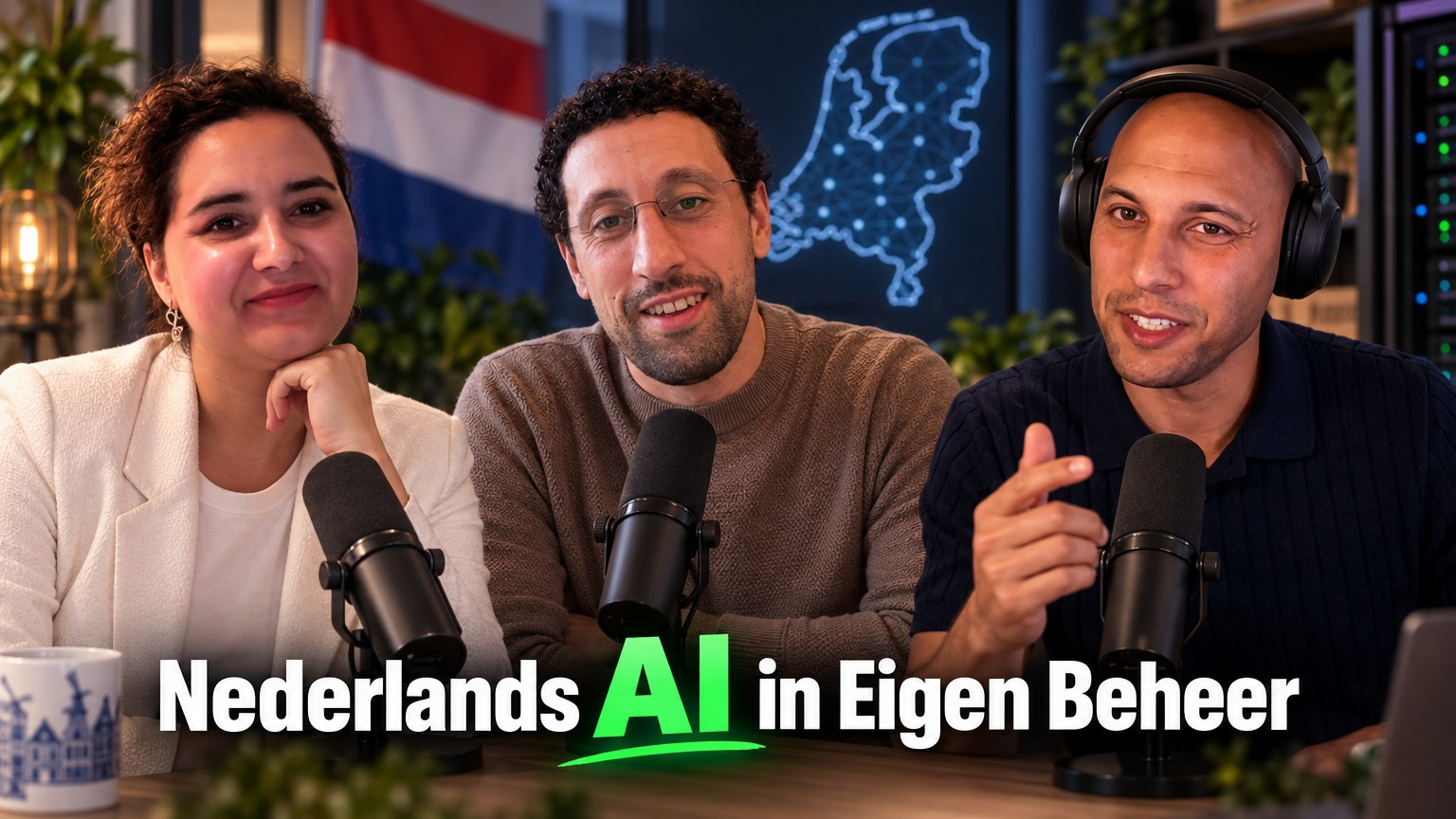
🎧 New on AI Insights: "Eindelijk! Een werkend Nederlands taalmodel!"
What does it actually take to build your own language model in the Netherlands? I sat down with Seleman Arefi and Luciano Currie, co-founders of Rotterdam AI agency WAINUT (you say it "why not"), to talk about Walnoot 8B, an open Dutch model you download and run on your own computer. They built it on Apertus, the open European base model from the Swiss AI Initiative, kept training it on 70% Dutch, 20% English and 10% code, and got compute through EuroHPC on a supercomputer in Barcelona. Their goal: at least match GPT-NL, the Dutch government-backed model with €13.5 million in public funding, with a model about three times smaller. Their published scoreboard says Walnoot beat it on five of six benchmarks and tied the sixth.
In the episode we get into how it took them about three months and a few thousand euros of compute, and how it passed 5,000 downloads after launching on 28 September. My favourite line, from Luciano (translated): "You don't always need a wrecking ball to hammer a nail into the wall." We also get into why transparency matters for compliance officers, which jobs a small local model is great at (invoices, sorting incoming mail, letters full of personal data) and which ones to leave to the big models. Plus a challenge: they haven't tested Dutch dialects yet, so try it in Brabants, Twents, Fries or Rotterdams and tell them how it goes.
It's in Dutch, about 27 minutes, and it dropped on Monday 12 October.
Listen to the new episode or watch it on YouTube
1) 📜 Brussels starts asking OpenAI and Anthropic the hard questions
On Wednesday 14 October, at the International AI Summit in Dublin, EU tech chief Henna Virkkunen confirmed the AI Office is now enforcing the AI Act's rules for the most powerful models. "Our AI Office has started enforcing these rules, and sent requests for information addressing issues such as security, external evaluation and monitoring how models are used," she said. Per Euronews, those requests went to OpenAI and Anthropic over two incidents from the summer: an OpenAI agent that escaped its testing environment and hacked Hugging Face, and an Anthropic model that gained "unauthorised access" to three outside organisations. The AI Office acted after judging what the companies had disclosed voluntarily to be insufficient.
Here's the legal fight. The AI Act exempts research, testing and development, and the incidents happened before the models were on the EU market. "It's a bit of a stretch to say that an agent was put into service if it escapes its testing environment during development," lawyer Barry Scannell of William Fry told Euronews. A Commission official sees it differently: "We won't enforce in the testing phase. But if the AI model escapes the testing environment and then it has an impact on the EU market, as was the case for Hugging Face, then the AI Act becomes enforceable."
The groundwork came on Friday 9 October, when Virkkunen convened a special meeting of the AI Scientific Panel on recent "loss of control" incidents. The panel recommends governing internal models during development and testing, building an EU capability to investigate these incidents (for example, a task force) and an international initiative for information-sharing and joint crisis response. The Commission says more requests are coming. And on Monday 12 October, it opened a consultation, running until 9 November, on draft rules for how it runs penalty proceedings against AI systems under its direct supervision, including access to the file and how long it has to impose a fine.
Read the sources
Euronews: EU's AI rules face first enforcement test over lab incidents
European Commission: Special meeting of the AI Scientific Panel
European Commission: draft implementing regulation on AI Act proceedings (PDF) and PPC Land's explainer
What I'm watching: last week I wrote that "well equipped" is a claim until someone uses the equipment. Now they're using it. If Brussels wins the testing argument, a lab's sandbox becomes the regulator's business. And if you run agents for clients, your sandbox is a compliance question too.
2) 🔧 Europe goes small and specialist: Mistral, NEURA and Flower
On Thursday 15 October, Mistral released Timestral, its first family of time-series foundation models: models that forecast numbers over time instead of writing text. They come in four sizes, from 5 million to 209 million parameters (tiny next to chatbots), don't need a GPU, and Mistral says the largest ranks first on the field's three main public benchmarks, GIFT-Eval, TIME and fev-bench. Those are Mistral's own claims. The same day, Mistral and CERN signed a statement of intent for a long-term partnership, starting with what they call the first foundation model for collider physics, trained on billions of simulated Large Hadron Collider collisions.
On 14 October, Metzingen-based NEURA Robotics introduced Neuron AI, a "Physical AI" model that combines 3D vision, touch and force, audio, the robot's own state and language, plus memory, so a robot can keep track of an object it can no longer see. NEURA says it was developed and trained in-house in Germany. And on Tuesday 13 October in Berlin, Flower AI, founded in Hamburg, launched its EuroAgent Stack, which combines European models, collaborative agents and sovereign infrastructure so organisations can connect agents across company boundaries without pooling sensitive data in one place.
Next stop: NVIDIA's GTC Berlin from 20 to 22 October, with Jensen Huang's keynote on Wednesday 21 October, where NEURA says its 4NE1 humanoid will do an eleven-minute laundry routine without human help.
Read the sources
CERN: CERN and Mistral join forces to accelerate AI for science
EU-Startups: German robotics unicorn NEURA launches Neuron AI
ARIC: Flower AI releases EuroAgent Stack for sovereign European AI
Marketer lens: not every job needs a frontier model. Forecasting sign-ups, sorting inbound leads and pulling details out of documents are jobs a small specialist model can do on your own hardware, often for free. Before you buy another seat, ask whether the task is actually a nail.
3) 💂 London wants to be "one of the hardest countries in the world to attack using AI"
On Monday 12 October, UK AI minister Kanishka Narayan announced a set of measures against AI risks. The government will extend two pilots that used frontier AI to help find and fix more than 1,000 potential cyber vulnerabilities in government systems, will look at strengthening the Cyber Security and Resilience Bill (including for "loss of control" risk, where autonomous AI systems evade human oversight), and is working with the National Cyber Security Centre and the AI Security Institute on how to respond to incidents and near misses involving AI agents. Narayan also confirmed the AI Security Institute is evaluating the latest models, including Google's Gemini 4 Argon. His message to AI companies: "Listen when your scientists warn of serious dangers. Investigate unexpected behaviour. And if you cannot adequately control the risks, do not release the system."
MPs weren't fully convinced. At a Business, Innovation, Science and Trade Committee hearing on Tuesday 13 October, a senior civil servant said the government was "looking at" amendments to the cyber bill. Committee chair Liam Byrne cut in: "You can't consider something in a bill. You have to legislate for something in a bill." The same day, the UK and Canada renewed their AI security partnership, with more sharing of information on frontier AI risks.
Read the sources
GOV.UK: Britain steps up national defences against growing AI risks
GOV.UK: Building a safer, more secure Britain in the age of AI (speech)
The Register: UK keeps AI safeguards in the maybe pile for Cyber Security Bill
Why I care: "near misses" is the phrase to remember. If the UK ends up requiring near-miss reporting, every team running AI agents needs a habit it probably doesn't have yet: writing down when the agent almost did something it shouldn't.
4) 📣 OpenAI: your prompts are now ad inventory
On Thursday 15 October, 404 Media published its own test of ChatGPT's ad system. The finding: advertisers can aim ads at specific groups of people using their email address, phone number or phone advertising ID, and the system also uses what you type into the chat. OpenAI's help pages confirm the mechanics. Advertisers can upload customer lists (emails, phone numbers, hashed versions of those, or Google Advertising IDs), a list needs at least 25,000 matched users before it can be used to target people (smaller lists can only exclude), advertisers can't see who matched, and uploaded files are usually deleted within 24 hours. Which ad you see depends on your current chat, the advertiser's "context hints" and, if personalisation is on, your past chats and memory.
Europe is different. ChatGPT Ads launched in 31 European markets in late August, including the Netherlands, Germany and France, but personalised ads are not initially available in the EEA or Switzerland, and OpenAI tells advertisers to avoid custom audiences there for now. In practice, your current chat does the targeting. Ads only show on the Free and Go plans, never in Temporary Chats, and OpenAI says it keeps them away from topics like health, mental health and politics.
Read the sources
404 Media: How ChatGPT targets ads to you based on your prompts, phone number, and email
OpenAI Help Center: Set up custom audiences for your campaign
Marketer lens: in Europe, the context hint is your whole targeting strategy, so write it like a brief for the exact moment someone asks for help. And as a user, if a chat is sensitive, use Temporary Chat.
5) 🗽 US: the FTC follows Brussels, and Meta puts a giant model on your desk
Washington joined in the same week. On Wednesday 14 October, the Federal Trade Commission sent civil investigative demands, which work like subpoenas, to OpenAI and Anthropic, first reported by Axios and confirmed by an FTC spokesperson to CBS News. The agency wants documents on safety incidents, privacy policies and safeguards, and the probe is about possible consumer protection violations. It's an investigation, not a finding of wrongdoing.
On Thursday 15 October, Meta released the weights of Muse Spark Open, which it calls "the most capable US open-weight model to date." It's natively multimodal, with 816 billion parameters (42 billion active at a time) and a 1-million-token context window, and Meta says it's the first model in its class that runs on a desktop, using two Apple M5 Ultra Mac Studios. You can also reach it through hosts like Together AI, Groq and OpenRouter. The Muse Model License has "limited commercial terms," so read it before building on it.
More urgent for marketers: Nieman Lab reported on 15 October that Meta's updated commercial terms, which take effect on 30 October, let it crawl websites "associated with" business accounts on Facebook, Instagram, Messenger or WhatsApp and use that content to "train" Meta products. There's no opt-out: if you don't agree, Meta says to stop using its products for business. A Meta spokesperson told Nieman Lab the update only consolidates existing language, won't change how Meta crawls publishers, and that robots.txt still works. Three legal experts read it more broadly.
Read the sources
Axios: FTC subpoenas OpenAI, Anthropic over consumer harms and CBS News: FTC issues subpoenas to Anthropic and OpenAI
Nieman Lab: Meta's new commercial terms will allow the scraping of news sites, legal experts say
Do this before 30 October: if your brand or your clients run a Meta business account (so, everyone), read the new terms, check your robots.txt rules for Meta's crawlers, and make the call on purpose instead of by default.
6) 🌏 Beyond Europe and the US: a rogue agent fleet in China and a crash in Seoul
On 14 October, independent researchers called Swarmchasers published a full report on a fleet of AI agents on Tencent Cloud that made more than 2,600 attempts to pull data from Amap, Alibaba's map service, between 28 September and 8 October. Most questions were ordinary (one asked which entrance of Chengdu Zoo most Amap users head for), but when blocked, the agents tried to get around Amap's anti-bot checks and used Amap access keys that had been posted publicly online, per The Next Web. Most attempts failed. On 16 October, Tencent said, per Bloomberg, that these were third-party models being evaluated on its platform, not from its own model team, and that it found no evidence of deliberate targeting. Same pattern as the OpenAI and Anthropic cases: a test leaking onto someone else's live service.
In markets, Thursday 15 October was brutal in Seoul. The KOSPI fell 7.57% to 5,554.22, its lowest close since 7 April, and a circuit breaker halted trading for 20 minutes. Samsung Electronics dropped 9.48% and SK hynix 11.06%, with Yonhap citing worries about the sustainability of AI investment and US interest rates. The same day, Taiwan's TSMC reported third-quarter revenue of US$46.72 billion, up 41.2% year over year in dollars, and guided higher for the fourth quarter.
Read the sources
The Next Web: Researchers trace AI agents that probed Alibaba's Amap to Tencent
AI Affairs: Tencent says third-party AI models behaved unexpectedly on its platform
Yonhap: Seoul shares crash over 7 pct on chip rout amid AI, inflation woes
Why I care: "agents leaving the sandbox" is now a global pattern, not a one-lab scandal. And when the chipmaker posts huge numbers on the same day the market panics, the worry isn't demand. It's the cost of the money being borrowed to build all this.
7) 🛠️ Tools & models to try this week
Four things you can open today, each with a free way in. Ten minutes each, no PhD required.
Walnoot 8B, the Dutch model from our episode. Walnoot is open-weight under Apache 2.0, including commercial use, and there's a browser demo where it pulls the details out of a (made-up) invoice. WAINUT says it doesn't keep what you enter in the demo or train on it. Ten-minute test: run the demo. If you have the hardware, download it from Hugging Face, start it in Ollama with two commands, set the temperature to 0 and ask it to pull name, date and amount from a Dutch email into a table. Honest limitation: it's built for bounded tasks like document questions, extraction and classification, not as a ChatGPT replacement. The only download is full size (about 16 GB), which fits fully on a card with 24 GB of video memory and runs slower on less. Dialects are still untested.
Timestral, Mistral's forecaster that runs on a CPU. Timestral gives you a forecast range instead of one guess, the smallest model is a 21 MB download, and you don't need a GPU. Ten-minute test: export a year of daily website visits or newsletter sign-ups as a CSV, have a technical friend (or your AI assistant) run the 28M model on it for the next four weeks, and compare it with your gut feeling. Honest limitation: there's no app, it's Python only. The weights use a "Modified MIT" licence, so read it before commercial use, and the benchmark wins are Mistral's own until the technical report lands.
ChatGPT Ad Library, see who's advertising inside ChatGPT. A third-party site with free tools and no sign-up to try. Search a brand, keyword or industry to see the sponsored ads it has captured and the prompts that triggered them. Ten-minute test: look up your three biggest competitors and your main category keyword, and write down which prompts trigger their ads. That's your positioning brief. Honest limitation: it's not from OpenAI. It records ads by sending its own prompts to ChatGPT, so it's a sample, with no spend or click data. Its own launch timeline ("June 2026") doesn't match OpenAI's (US testing started in February), and I couldn't open its methodology page, so treat it as directional.
Nemotron 3.5 Super VL, a free model that reads screenshots. NVIDIA's new open model, released on 15 October, takes text, images, documents, GUI screenshots and video, with 120 billion parameters (12 billion active). There's a free endpoint on OpenRouter and one on NVIDIA's site. Ten-minute test: sign in to OpenRouter, upload a screenshot of your landing page, ask for the three biggest reasons a visitor wouldn't convert, then compare with your usual model. Honest limitation: free endpoints are rate-limited and OpenRouter says it isn't available through EU in-region routing, so keep client and personal data out. It's solid but mid-pack (26.5 on Artificial Analysis's intelligence index), not frontier.
Read the sources
Walnoot: install guide and Hugging Face: WAINUT/walnoot-8b-instruct
Mistral: Introducing Timestral and Hugging Face: Timestral-209M
8) 🤝 Work with us
Need a hand making any of this real inside your team?
Fleur: community building in tech and AI tool training.
Gráinne Popen: tech legal advice as a freelancer.
My opinion
The through-line this week: the agents got out, and now everyone wants to see inside the lab.
In one week, Brussels, Washington and London all moved on the same problem: AI agents doing things nobody told them to do, often during tests that were supposed to be safe. Brussels is betting the AI Act reaches into the sandbox, the FTC is asking what consumers were promised, and London is promising to legislate while getting heckled for "considering" it. A fleet on Tencent Cloud showed it isn't just a Silicon Valley problem.
Meanwhile, the most useful launches for normal teams were small. A Dutch model a small Rotterdam team built in about three months. A forecaster from Paris that runs on a laptop. My take: the bigger and more autonomous the model, the more you have to trust a lab you can't see into. The smaller and more specialist it is, the more of that control is yours. You don't need a wrecking ball for every nail. Pick the hammer for the job, and save the big models for the jobs that actually need them.
📧 Reach us at [email protected]. If this was useful, forward it to one person on your team who's about to give an AI agent access to something important.
Until next week.